



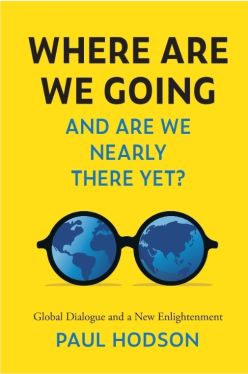
In a world of dizzying change and global challenges, Where are we Going and are we Nearly There Yet? offers a thought-provoking reflection on the human experience and our collective future. Drawing from diverse encounters across the globe, this book delves into the inconsistencies and complexities of our modern world, from the hallowed halls of power to the everyday struggles of individuals.
As humanity stands at a critical juncture, the author invites readers to question the status quo, challenge long-held beliefs, and imagine a future where we embrace our shared responsibilities and common purpose. Where are we Going? Draws upon an unusually wide base of research to explore the urgent need for change in our relationships, resource use, economic progress, governance, and conflict resolution.
This book is a clarion call for a new, inclusive Enlightenment - one that acknowledges cultural diversity, religious faith, and the universal rights and freedoms we all deserve. It encourages readers to reflect on their own lives, purpose, and the kind of world they wish to inhabit.
Whether you're seeking insights into the human condition, grappling with the challenges of our time, or simply looking for a fresh perspective on the world we live in, Where are we Going? promises to be a thought-provoking and transformative read. Embark on this journey of self-discovery and global understanding, and join the conversation about the future we want to create together.
Informacje dodatkowe o Where are we going, and are we nearly there yet?:
Wydawnictwo: b.d
Data wydania: 2024-12-05
Kategoria: Socjologia, filozofia
ISBN:
Liczba stron: 496
Tytuł oryginału: Where are we going, and are we nearly there yet?
Język oryginału: Angielski
Kup książkę Where are we going, and are we nearly there yet?
Sprawdzam ceny dla ciebie ...
Cytaty z książki
REKLAMA







Przeczytane:2026-02-05, Ocena: 5, Przeczytałam, The Book Network 2026, Filozofia, Mam, 12 książek 2026, 26 książek 2026, 52 książki 2026, Przeczytaj tyle, ile masz wzrostu – edycja 2026, Wyzwanie - wybrana przez siebie liczba książek w 2026 roku, RECENZENCKA 2026, Insta challenge. Wyzwanie dla bookstagramerów 2026, 2026,
" [...] Honesty, trustworthiness, duty, love, and peace might be considered behavioural aspects of human nature that we struggle to put into practice or find a comfortable or practical or effective balance of. [...]"
When I picked up Paul Hodson's latest e-book, "Where are we going, and are we nearly there yet?", I didn't expect to find so many topics covered. The author covers topics such as children, adolescence, education, economics, parenting, leadership, security, war, taxes, and women's equality. Let's focus on women's equality. As the author himself noted, we are far behind on this topic. Women don't always have the same rights as men, because religion interferes. But you surely already know that. Women's equality requires the involvement of men. Do you agree?
In his book, Paul Hodson references many well-known and lesser-known philosophers, including Seneca, John Rawls, and Thomas Hobbes. I admit I wasn't familiar with the latter two gentlemen before.
I found a wealth of interesting and unknown information here. Thank you for each and every one of them.
The author tries to answer the questions: Are we capable of cooperation or competition?
Is economic wealth and materialism necessary for happiness?
Do conflicts drive us to progress?
Is the four-day work system a good solution?
What impact has the Covid-19 epidemic had on society?
I'm glad that the author didn't base his work on just one country, but literally the entire world.
Hodson wrote that this isn't a philosophical book. However, that's how I interpreted it. Is that a bad thing?
Do you know that the strength of our character can show us whether we are true to ourselves or whether we change like a flag, depending on how someone plays our game? This book will also teach you about the different types of liberalism and the fourth leading cause of death for people aged fifteen to twenty-five.
Despite its length, this book is a quick read. It will help you expand your knowledge.
When you pick up "Where are we going, and are we nearly there yet?", be prepared to ponder the topics discussed after reading it.